


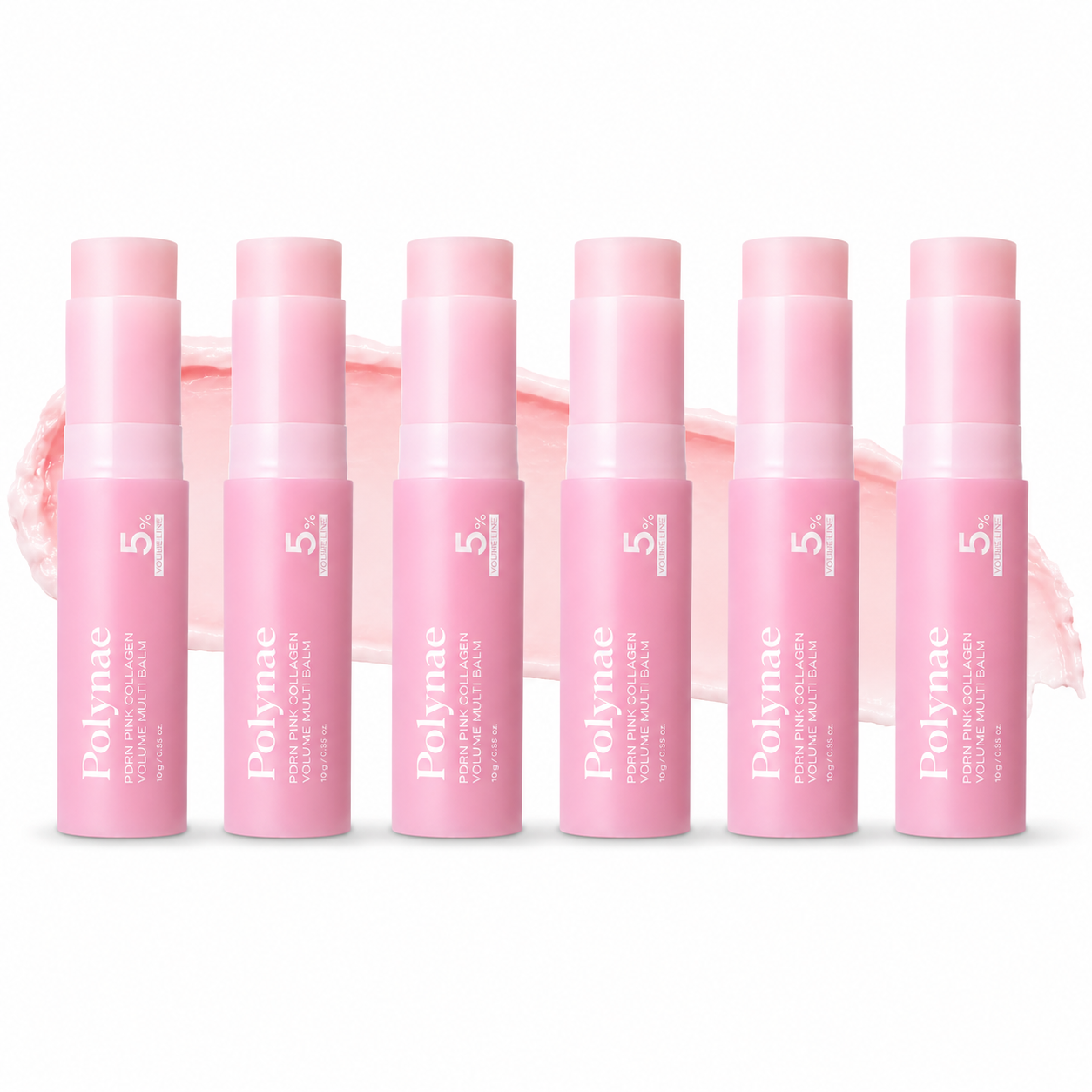
PDRN Collagen Volume Multi Balm
PDRN Collagen Volume Multi Balm
A PDRN-infused collagen balm that restores facial plumpness and surface
luminosity by supporting the skin's own collagen-building process, visibledensity improvement with continued daily use.
PDRN collagen balm, visibly plumped
Noticeable volume, without the needle
Barrier-sealing moisture that holds
One balm, face and lips
BUNDLE & SAVE
Couldn't load pickup availability


PDRN Collagen Volume Multi Balm
Ataglance
Ataglance
- PDRN signals skin cells to rebuild collagen from within, not just coatthe surface
- Korean PDRN collagen balm delivers salmon-derived polynucleotides
at a cellular repair level - Restores volume and plumpness, targets hollowing and density loss,
not surface dryness - Barrier-safe formula, no harsh actives, rebuilds without triggering
reactive skin - Pairs with retinoids, niacinamide, and vitamin C without interference
Description
Description
Most K-beauty balms work as occlusives, they seal. PDRN worksdifferently: it signals your skin to rebuild collagen from within, the samemechanism used in clinical microneedling treatments, without the barrierdisruption. If you broke out from a viral balm or destroyed your barrierlayering tretinoin and vitamin C, that's the distinction that matters here.
This balm leads with PDRN, a polynucleotide active drawn from Koreanclinical research, paired with collagen to support visible plumpness anddensity where skin has started hollowing or losing its structure. Oneactive doing the structural work, without the 8-product stack andwithout the reaction roulette. Apply it as your final night step. In four tosix weeks, your skin starts doing the talking.
What's inside
What's inside
- PDRN + collagen complex, the skin-repair duo behind the volumizing effect
- Lightweight balm base, melts on contact for a glass-skin finish
- Free of parabens, mineral oil, and added synthetic fragrance
- Multi-use formula, works on lips, cheeks, and dry patches




Backed by Clinicians

I consistently recommend Polynae's PDRN formulations because
PDRN supports the skin's own collagen-building process at the
cellular level, addressing uneven texture more precisely than AHAcycling or vitamin C serums alone. For patients managing post-inflammatory hyperpigmentation or a compromised skin barrier,
this produces measurably more stable results without the irritation
cycle that causes most people to abandon their actives.
- Dr. Hyejin Park
Board Certified Dermatologist, K-Beauty Actives
Pacific Dermatology Associates, Los Angeles
The Viral K-Beauty Balm Problem

Pore-Clogging Breakouts
Pore-Clogging Breakouts
EFFECTS ON YOUR SKIN
Heavy occlusive formulas trap dead skin cells and sebum at thesurface, triggering cystic breakouts within days of first use.
WHY IT HAPPENS
Most viral K-beauty balms are built around petrolatum orlanolin bases with no comedogenicity testing, occlusion is thefeature, and pore blockage is the side effect nobody discloses.
Barrier Damage Cycle
Barrier Damage Cycle
EFFECTS ON YOUR SKIN BARRIER
Skin that breaks out from the balm gets treated with activesto clear it, stripping the barrier further and leaving skin tight
and reactive.
WHY IT HAPPENS
Balms without active repair ingredients seal in irritants ratherthan addressing them, so each application compounds the
inflammation instead of resolving it.
Zero Collagen Repair
Zero Collagen Repair
EFFECTS ON YOUR ROUTINE
Months of nightly layering, and skin still looks deflated bymorning, because none of the steps contain an ingredient thatsignals collagen production in the deeper skin layer.
WHY IT HAPPENS
Viral balms compete on texture and finish, not actives. Theformulas are optimized for first-touch sensation, not thestructural repair that produces visible firming.
Greasy Camera Finish
Greasy Camera Finish
EFFECTS ON YOUR COMPLEXION
On-screen skin reads slick and flat rather than luminous, and foundation pills on top when you try to cover it.
WHY IT HAPPENS
High-petrolatum formulas have no mechanism for regulatingsurface shine, so the finish that looks dewy in still photos becomes a greasy cast under video lighting.
 Visibly plumper skin

PDRN supports collagen production deep down.
 Keeps your barrier intact

Balm texture seals without clogging pores.
 Layers under actives cleanly

No pilling. Plays well with serums.
 Works while your skin rebuilds

Cumulative glow over weeks, not days.


Trusted by Glow-Back,Barrier-Repair, and Real Skin


How it Works
A daily collagen balm routine built for visible volume.
-

STEP1
Apply to clean, bare skin
-

STEP 2
Warm and press into skin
-

STEP3
Layer as your final seal
-
STEP 4
Use morning and night daily


How we stack up
Six features that separate a PDRN-active barrier balm from the viral K-beauty alternatives
that broke out half the internet.

Customer reviews
-

★★★★★
ok!
used it every night for a month, skin looks better, no irritation, easy to recommend
-

★★★★★
ngl surprised me
didnt expect much honestly. 5 weeks in and my skin looks fuller. no complaints
-

★★★★★
5 stars
Yeah it works. Applied nightly since late may, skin looks less hollow under the eyes. Simple as that.


FAQs
Will this actually work better than a viral K-beauty balm?
Will this actually work better than a viral K-beauty balm?
Totally get it, and that skepticism is earned. If you've ever bought a trendy K-beauty balm only to wake up with a greasy face and a fresh breakout, you already know the problem: most viral balms are built around occlusive oils and fragrance, not activerepair ingredients. They trap moisture, yes. But they don't rebuild anything.
The Polynae PDRN Collagen Volume Balm works differently at the ingredient level. PDRN (polydeoxyribonucleotide)is a DNA-repair compound, used in clinical aesthetic treatments for years, that signals the skin to produce its own collagen and repairdamaged cells, not just sit on top of them. Layered with ceramides and peptides, it addresses dehydration and firmness at thesame time, which is why skin feels different the morning after the first use, not just while it's on.
The result is actual skin density change over time, not a temporary glow that disappears when you rinse.
Can't l just layer more serums at night?
Can't l just layer more serums at night?
We get it. the logic makes sense. More actives, more results. But if you've been layering 8 products every night and stil wakingup with tight, dehydrated skin, the issue usually isn't the number of steps. I's that most serums are formulated to workindependently, and stacking them creates either pilling, pH conflict, or ingredient cancellation.
Vitamin C and niacinamide together af the wrong concentration. An AHA under a retinoid. A water-based hyaluronic acid applied over an occlusive. Each one logical on its own, counterproductive in the stack.
Atargeted PDRN collagen treatment paired with the right barrier support does more in fewer steps, because the ingredientsare formulated to work together rather than compete. Fewer layers also means less surface iritation for skin that's already
compromised from trying too many harsh actives.
I've damaged my skin barrier before, is this safe to use?
I've damaged my skin barrier before, is this safe to use?
This concern comes up a lot, and it's the right question to ask. If you've ever come out of a strong AHA phase with a
compromised barrier, tight, reactive, flushing at everything, you know how long it takes to get skin stable again.
Polynae's formulations are built specifically for that skin state. PDRN is a repair-first ingredient, nof an exfoliating orresurfacing one, itsupports cellular regeneration without stripping or thinning the barrier. There are no high-concentration acids, no fragrance, and no known sensitizers in the core lineup.
That said: if your skin is actively broken out or you're mid -prescription-retinoid course, introduce one product at a time andwatch your skin's response for the first two weeks. Most customers who've been through the barrier-damage cycle report that
their skin settles into the routine quickly.
What makes this worth the price?
What makes this worth the price?
That's a fair thing to ask,especially if you've already spent hundreds on Skinceuticals, Sunday Riley, or muti-step clinicaloutines and still don't have the skin you want. The real number to think about isn'tthe price of one product. It's what you've already spent getting here. If you've cycled through 8 different AHA peels, three vitamin C serums that did nothing for stubborn dark spots, and a few viral balms that caused breakouts, that's easily $400 to $600 in attempted fixes. Most of that spend was on products that freat one
variable at a time, which is why the results never held.PDRN addresses collagen loss, dehydration, and cell repairin a single formulation, the same mechanism used in clinical aesthetic treatments, brought into a daily topical. Prevention is also cheaper than correction, and the longer you wait toaddress collagen loss, the more aggressive (and expensive) the intervention required.